November 17, 2026
Welcome to HagAstro
Seven years of imaging the night sky from a very bright Dallas backyard, finally in one place.
I started with Milky Way shots on a Fujifilm camera in 2019 (that's a steel T-Rex under the Milky Way in Bangs, Texas, at the very end of the gallery) and moved into deep-sky imaging at the end of 2022 with a Canon DSLR on a small refractor. Then came automation with an ASIAIR, a cooled mono camera and my first narrowband filters in 2023, a bigger refractor and a bigger sensor, and a couple of Seestar smart telescopes for the nights when I don't want to haul out the big rig. The About page has the whole story. Until now those images lived on a hard drive and in the odd social media post. This site puts them all in one place.
What you'll find here
- The gallery has every finished image, newest first. Click one to see it full size (you can zoom right in), along with what the object is and how the image was made: telescope, camera, filters and total exposure time.
- Earlier versions: many targets I've shot more than once as my gear and processing improved. Tick Show earlier versions on the gallery to see them all, or look under any image for its other versions.
- The blog is for the stories behind the pictures: nights out, new gear, and what I learn processing the data.
Shooting from the city
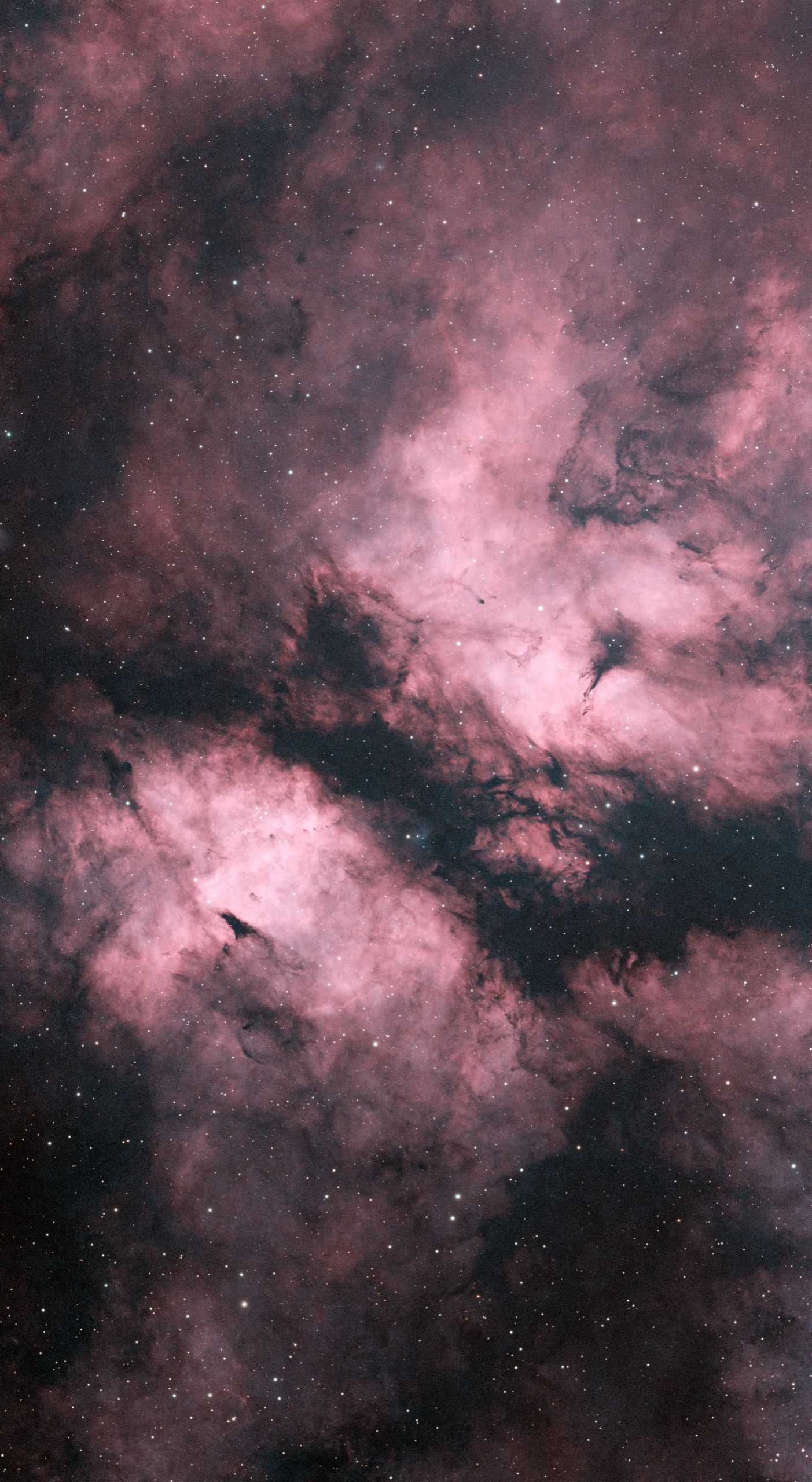
Almost everything here was shot from my backyard in Dallas, which sits under Bortle 8-9 skies: about as light-polluted as it gets. The trick is time and filters. Narrowband filters pass only the light that glowing gas clouds give off (hydrogen-alpha, oxygen III and sulfur II) and block most of the city's glow, and stacking many hours of exposures pulls the faint stuff out of the noise. The Butterfly Nebula above is 20.8 hours: 2,497 thirty-second exposures over a week of October nights, all from my newest scope, the Seestar S50 Pro smart telescope. It's small enough to set up in the backyard and leave running all night on its own.
Clear skies!